
Anyone who has lived in the UAE for more than a few months knows the drill. You mop the floor in the morning, run a few errands, come back in the afternoon, and there is already a fine layer of dust settled across the tiles again. It is not that you are cleaning wrong. It is that UAE homes deal with a combination of fine desert sand, AC-circulated dust, and humidity that most mop reviews written for other climates simply do not account for.
If you have ever bought a mop based on an Amazon review written for someone in Ohio or London, you have probably noticed it does not quite hold up here. Sand behaves differently than mud. Marble behaves differently than laminate. And a mop that works fine in a cooler, drier climate can leave streaks, dull polish, or even scratch marks on the kind of flooring common in Dubai, Ajman, and Sharjah homes.
This guide walks through what actually matters when picking a mop for tile or marble floors in the UAE, without the generic “top 10 mops” filler you find everywhere else.
Why UAE Floors Need a Different Approach
Three things make floor care here genuinely different from most other places.
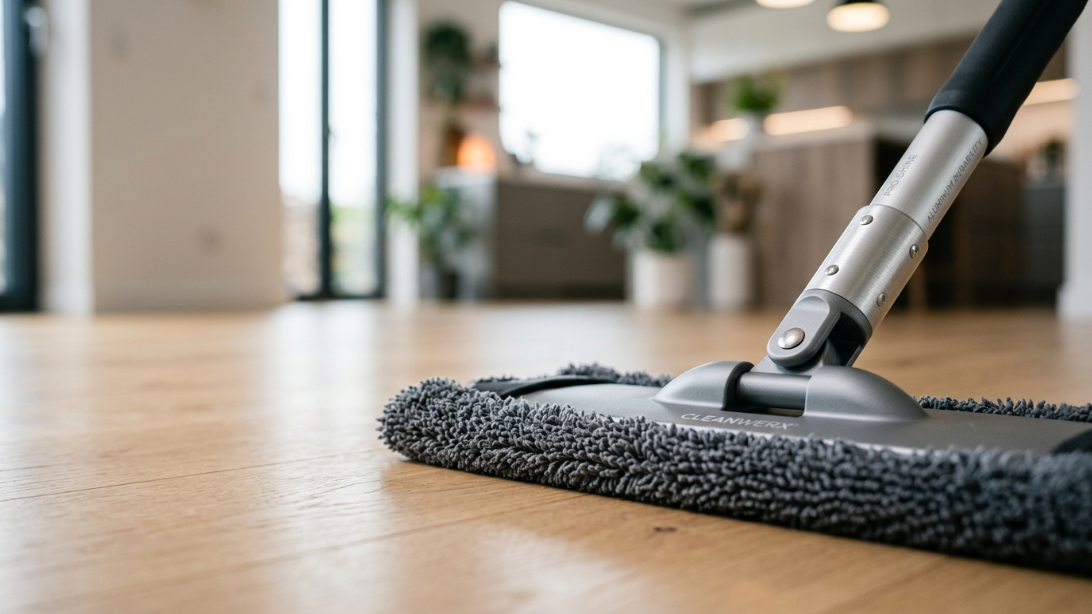
Fine sand and dust. Even if you live nowhere near the desert directly, sand finds its way into hallways, balconies, and entryways constantly. This sand is much finer than garden soil or mud, and it acts almost like sandpaper if it gets dragged across a floor by a dry mop head or a rough scrubbing pad.
Constant AC use. Air conditioning runs almost year round in most homes, and it circulates dust throughout the apartment or villa continuously. This means floors accumulate a light film of dust daily, not just after someone walks in with dirty shoes.
Humidity and quick drying needs. Especially from May through September, humidity outside is high, and a floor that stays wet too long after mopping can feel sticky or attract dust faster once it settles. A mop that leaves floors soaked for a long time is more of a hassle here than in a drier climate.
Once you factor these three things in, the “best mop” question becomes less about brand names and more about matching the mop type to your actual floor material and daily dust load.
Know Your Floor Type First
Before picking a mop, it helps to be honest about what is actually under your feet, because ceramic, porcelain, and marble do not respond the same way to cleaning tools.
Ceramic tile is common in older buildings and mid-range apartments. It is fairly tough and glazed, so it resists scratching reasonably well. The main weak point is the grout between tiles, which traps dust and darkens over time if it is not cleaned periodically.
Porcelain tile shows up a lot in newer developments. It is denser than ceramic, more resistant to water absorption, and generally very durable. The tradeoff is that polished porcelain shows footprints and dust more visibly, and repeated foot traffic with sand underfoot can leave faint micro scratches on a glossy finish over months or years.
Marble is the one that needs the most care. It is a natural, porous stone, which means it can stain from acidic spills like juice or coffee if they are not wiped up quickly. It also scratches more easily than tile, especially when sand is dragged across it. Marble is beautiful, but it is genuinely the least forgiving surface on this list when it comes to mop choice.
If you are not sure which one you have, a simple test helps: marble usually feels cooler to the touch, has visible natural veining that never repeats in a pattern, and can be scratched by a coin edge with enough pressure, while glazed tile generally will not scratch that easily.
Mop Types and What They Actually Do Well
Flat Microfiber Mops
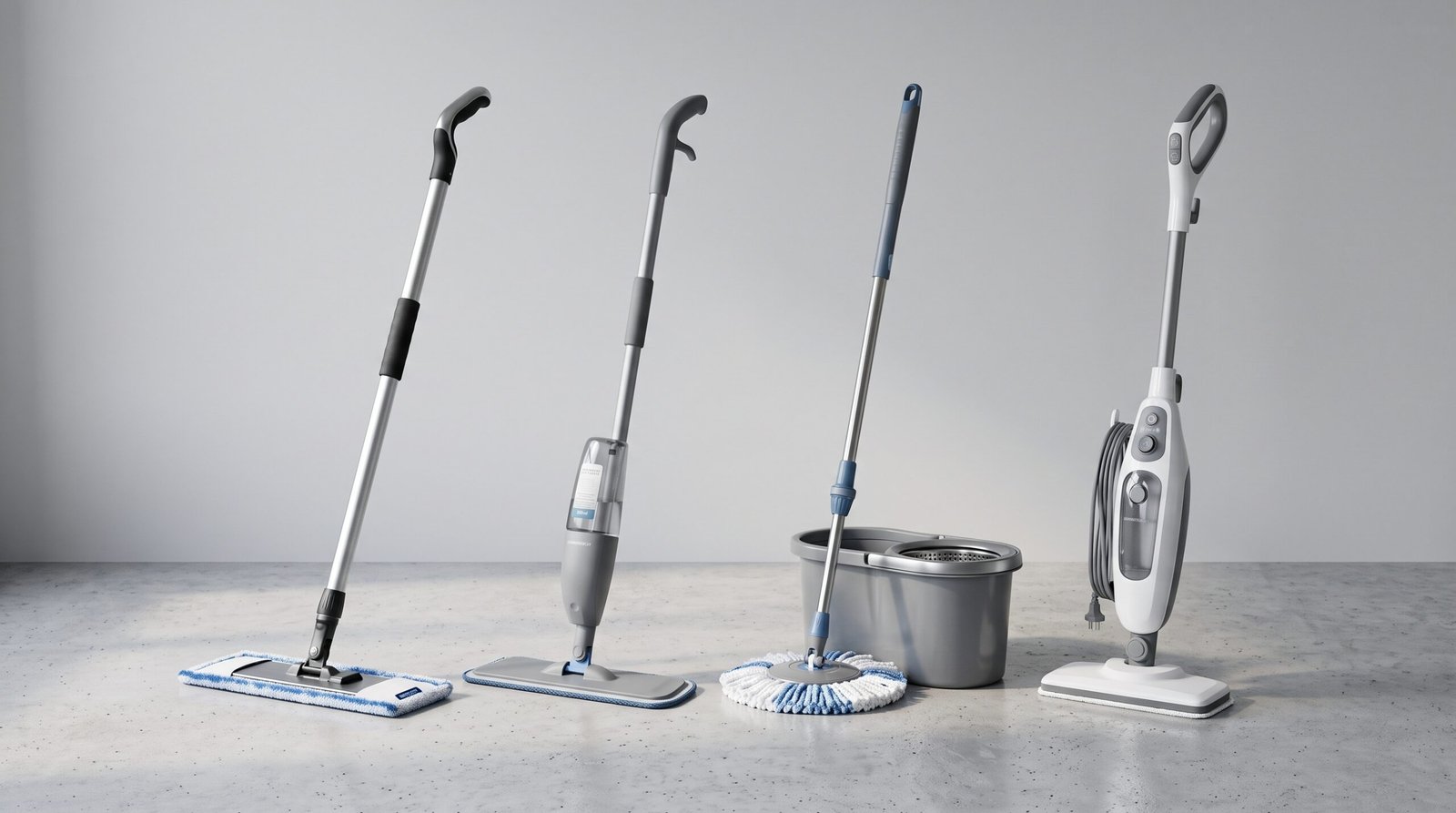
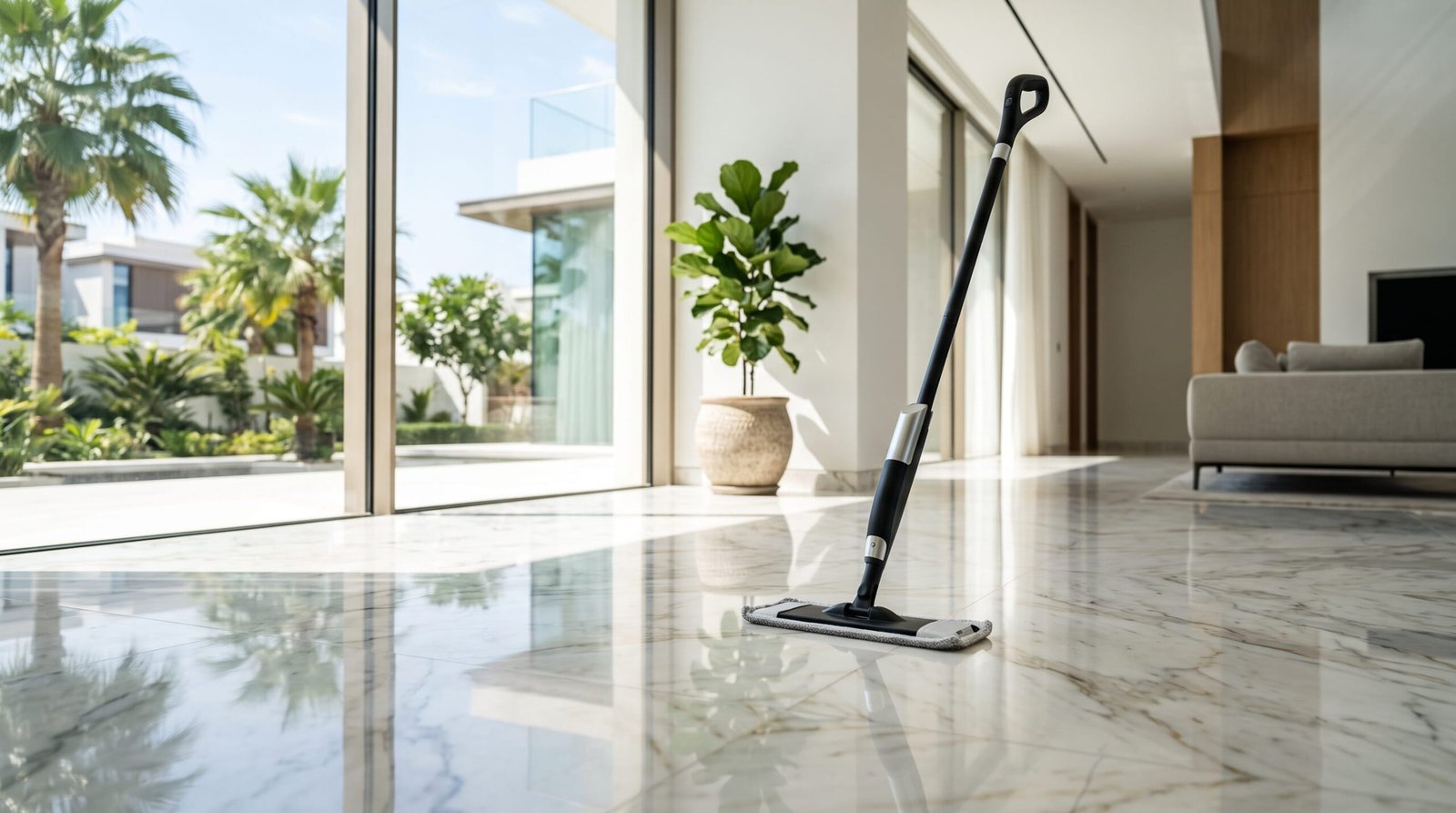
These are the reusable, washable pad mops that have mostly replaced the old string mop. For UAE homes, they are a solid daily option because the microfiber traps fine dust and sand rather than pushing it around, which is exactly the problem with older cotton string mops. They work well on ceramic, porcelain, and marble alike, as long as you avoid any pad described as scrubbing or abrasive.
The main thing to watch for is buying a pad with a rough or steel wool style scrubbing side. Some multi-pad sets include one for stuck-on grease, and that pad should never touch marble or polished porcelain.
Spin Mops with Bucket Systems
Spin mop and bucket combos have become popular because they let you wring the mop without touching it, and many models keep clean and dirty water separated so you are not smearing dirty water back onto the floor. For larger villas with more floor area to cover, this separation matters because you are not diluting your cleaning water as quickly.
These work fine on tile and marble as long as the mop head itself is soft microfiber rather than a coarse scrub head. If a spin mop system comes with a scrubbing attachment for tough stains, treat that the same way as a scrubbing pad and keep it away from marble.
Spray Mops
Spray mops with a refillable tank built into the handle are genuinely useful for quick daily touch ups, especially in kitchens and entryways where dust settles fastest. They use less water than a bucket mop, which also means faster drying, a real advantage during humid months when a soaked floor stays damp longer. The tradeoff is that the small tank needs more refills for a full villa, so they suit apartments and quick daily cleaning better than deep weekly cleans.
Steam Mops
Steam mops deserve a specific warning here. While they can be effective on sealed ceramic and porcelain, steam and heat can affect grout over time and are generally not recommended for marble, since the moisture and heat combination can interact poorly with the stone’s sealant. If you have marble anywhere in the home, it is worth keeping the steam mop limited to tile-only areas.
Vacuum Mop Combos
These have gained popularity in the UAE specifically because they handle the sand and dust problem well. A combo unit that vacuums first and mops second in one pass deals with the daily grit before it ever gets dragged around wet, which is the main cause of surface scratching on marble and polished porcelain. They cost more upfront, but for a home with heavy sand tracking, particularly ground floor villas or homes near unpaved areas, they tend to reduce the wear and tear that a plain mop cannot prevent on its own.
What Actually Matters When You Choose
Skip the marketing claims and focus on four practical questions.
Is the mop head genuinely soft, or does it just say microfiber on the box? Not all microfiber is equal. Cheaper pads can still feel slightly coarse. If you have marble, this is worth checking in person rather than trusting packaging alone.
Does it dry the floor reasonably fast? In humid months, a mop that leaves floors wet for twenty minutes or more is not just an inconvenience, it also gives dust more time to stick before the surface fully dries.
Can you separate clean and dirty water? For anything beyond a small apartment, a mop that lets you rinse without dumping dirty water back onto the floor will noticeably improve results, especially on lighter colored marble where streaking shows more easily.
Does it come with a genuinely gentle option for stone surfaces? If a set includes multiple pad types, make sure at least one is explicitly marked safe for natural stone or marble, not just “all floors.”
A Simple Routine That Works for Most UAE Homes
Dry sweep or vacuum first, always. This single step prevents most of the scratching that happens from mopping sand directly into a wet floor.
Use a neutral pH cleaner rather than anything acidic or heavily scented, particularly on marble, since acidic cleaners are one of the more common causes of dulled polish over time.
Wipe up spills immediately rather than leaving them, especially juice, coffee, or anything acidic on marble.
Do a lighter daily pass with a spray mop or dry microfiber, and save the full bucket or spin mop clean for two or three times a week, depending on foot traffic.
Dry the floor with a clean cloth after mopping marble specifically, since marble stays more prone to water spotting than tile.
If you are setting up a new home and building out your cleaning supplies from scratch, it is worth browsing a proper range of cleaning tools rather than buying one mop and hoping it covers every surface, since tile and marble genuinely benefit from slightly different approaches.
Common Mistakes to Avoid
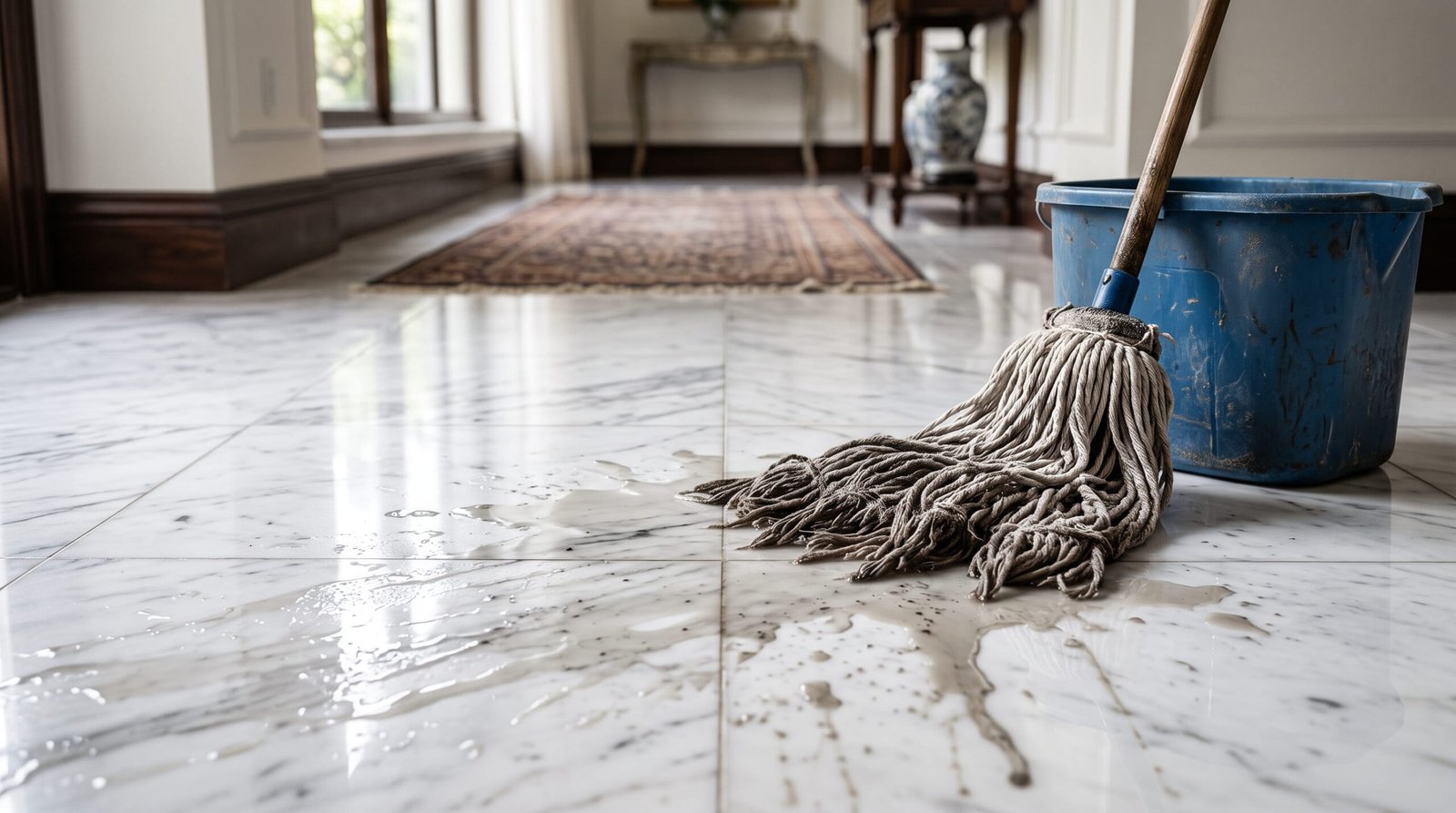
Using the same scrubbing pad on marble that you use on the kitchen tile is one of the most frequent causes of dulled or scratched stone floors in UAE homes. Another common one is skipping the dry sweep step and going straight to wet mopping, which turns fine sand into an abrasive slurry that grinds against the surface as you mop.
Overusing scented or multipurpose cleaning sprays is another issue, since many contain mild acids or alcohol that are fine for ceramic but not ideal for marble over repeated use. And leaving floors wet for too long, particularly during humid stretches, tends to attract dust back onto the surface before it has even fully dried.
Final Thoughts
There is no single mop that is objectively best for every UAE home, because the right choice depends on whether you are dealing mostly with ceramic, porcelain, or marble, how much sand and dust your home sees daily, and how large the space is. A small apartment with porcelain floors and light foot traffic can get by comfortably with a spray mop and a soft microfiber pad. A villa with marble flooring and regular sand tracking benefits more from a vacuum mop combo or a careful spin mop and bucket routine with a genuinely gentle pad.
The one rule that applies across the board is to always remove loose sand and dust before introducing water, and to keep anything abrasive away from marble entirely. Get that part right, and most decent mops will do a perfectly good job the rest of the way.
For general guidance on maintaining hygienic living spaces, the Dubai Municipality environment section also outlines useful public health and cleanliness standards relevant to UAE households.