
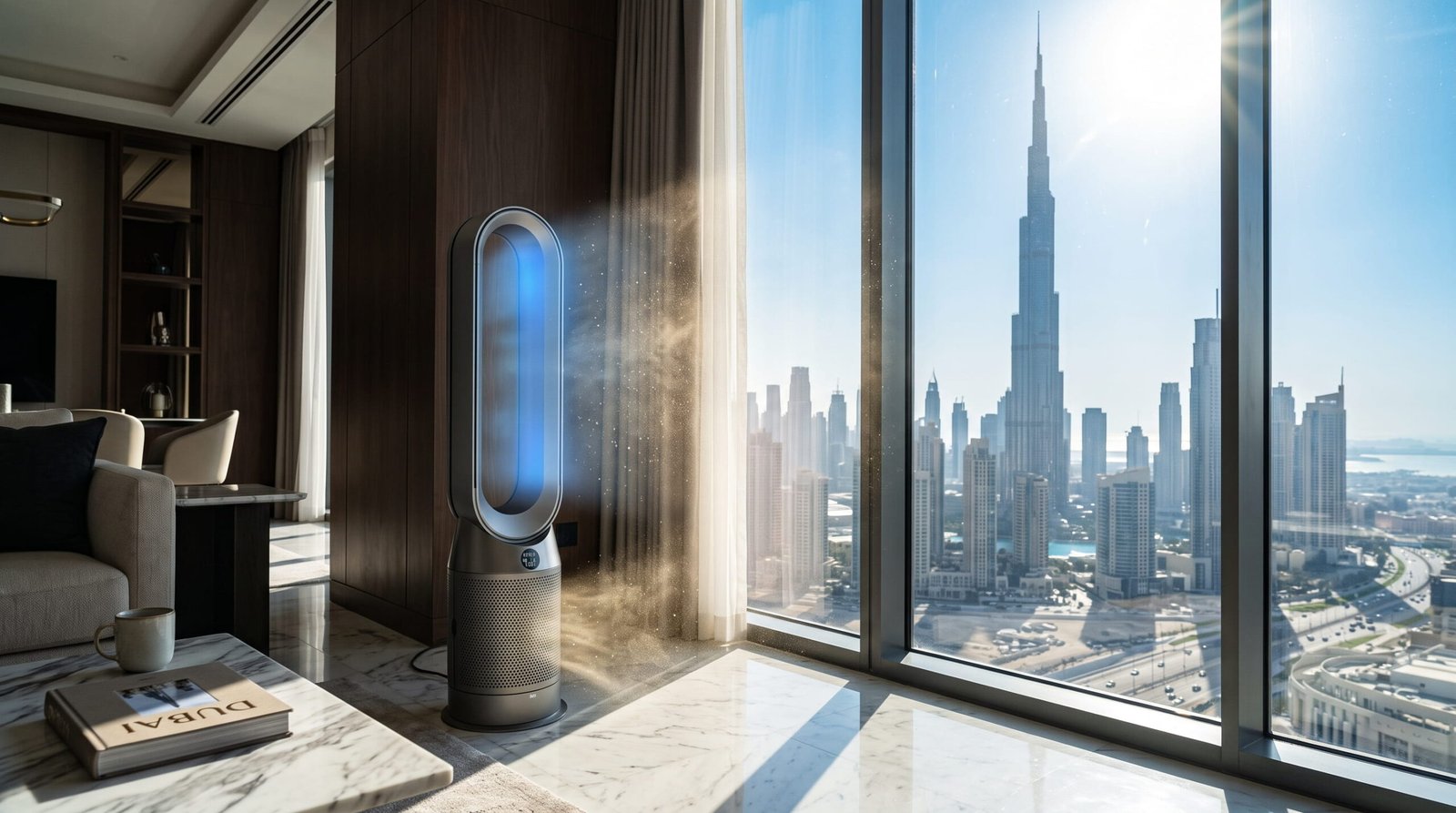
Dubai’s air quality is a topic every resident eventually has to think about usually after noticing dust settling on furniture within a day of cleaning, or waking up with a scratchy throat despite the AC running all night. An air purifier isn’t a luxury item here the way it might be elsewhere. For many households, it’s a practical response to a genuinely different environment.
This guide covers what actually matters when choosing an air purifier in Dubai, without the generic advice that ignores the specific conditions this city presents.
Why Dubai’s Air Is Different
Before choosing a purifier, it helps to understand what it’s actually working against.
Fine desert dust Dubai’s proximity to open desert means fine particulate matter is a constant presence, not an occasional weather event. This dust is smaller and more persistent than typical urban dust, and it infiltrates homes through doors, windows, and AC systems regardless of how well-sealed a building is.
Heavy air conditioning use Most Dubai homes run AC nearly year-round. Recirculated indoor air without adequate filtration allows dust, allergens, and airborne particles to build up rather than disperse, particularly in smaller apartments with less airflow.
Construction dust Dubai’s ongoing development means many neighbourhoods experience periodic spikes in construction-related particulate matter, which affects indoor air quality even in sealed homes.
High humidity spikes Particularly in summer months, humidity swings can affect dust mite activity and mould risk in poorly ventilated spaces.
Together, these factors mean an air purifier in Dubai is working harder and more continuously than one in a milder, less dusty climate which changes what actually matters when you’re choosing one.
What to Actually Look For
HEPA Filtration Is Non-Negotiable
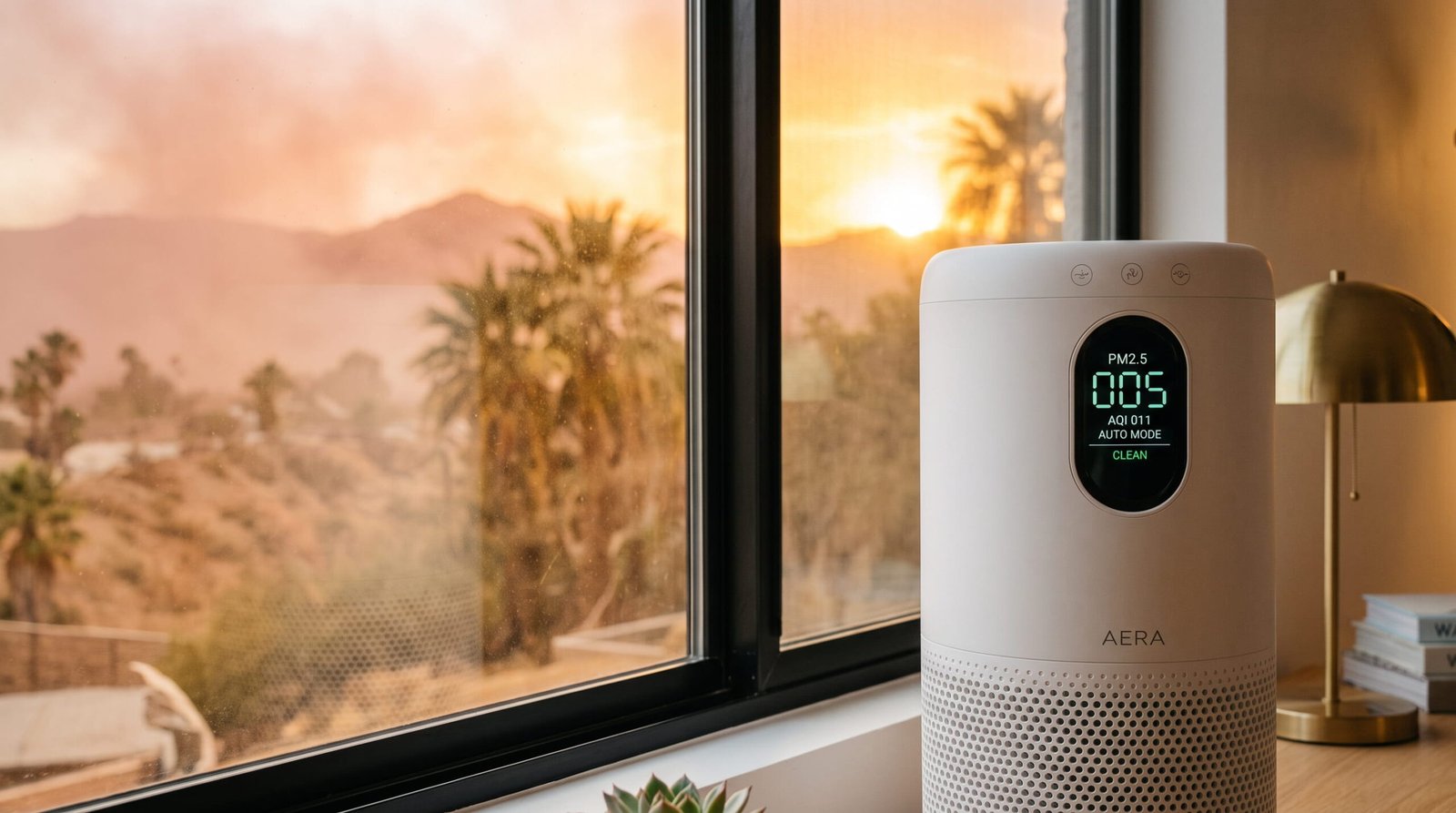
For Dubai’s fine dust specifically, a True HEPA filter (capable of capturing particles down to 0.3 microns) is the baseline requirement. Purifiers without genuine HEPA-grade filtration will struggle with the fine desert dust that defines Dubai’s air quality challenge. Be cautious of products marketed as “HEPA-type” or “HEPA-like” these terms often indicate a lower filtration standard than true HEPA.
CADR Rating Matched to Room Size
CADR (Clean Air Delivery Rate) tells you how effectively a purifier cleans air relative to room size. For Dubai apartments running AC continuously, it’s worth choosing a purifier rated for a room size larger than your actual space this ensures it can keep up with the higher dust load rather than running at maximum capacity constantly.
As a rough guide:
- Small bedroom (up to 200 sq ft) — CADR of at least 100
- Living room or open studio (up to 400 sq ft) CADR of at least 200
- Larger open-plan spaces — CADR of 300+ or multiple units
Pre-Filter for Dust Load
Given how much dust Dubai purifiers process compared to milder climates, a washable pre-filter is a genuinely useful feature. It captures larger dust particles before they reach the HEPA filter, extending the HEPA filter’s lifespan and reducing how often you need to replace the more expensive component.
Activated Carbon Layer
Useful for households near busier roads or construction zones, an activated carbon filter helps with odours and some airborne chemical particles that HEPA filtration alone doesn’t fully address.
Noise Level for Bedroom Use
If you’re running a purifier overnight which many Dubai households do given AC and dust combined noise level matters significantly. Look for a unit with a genuine “sleep mode” rated under 35 decibels, quiet enough not to disturb sleep while still filtering continuously.
Filter Replacement Cost and Availability
This is the detail most buyers overlook until months later. Dubai’s higher dust load means filters need replacing more frequently than manufacturer estimates based on milder climates suggest. Before buying, check the realistic cost and local availability of replacement filters a cheap purifier with expensive, hard-to-find filters often costs more over a year than a slightly pricier unit with affordable, widely available filters.
Room Size Guide for UAE Homes
| Space | Recommended Coverage | Notes |
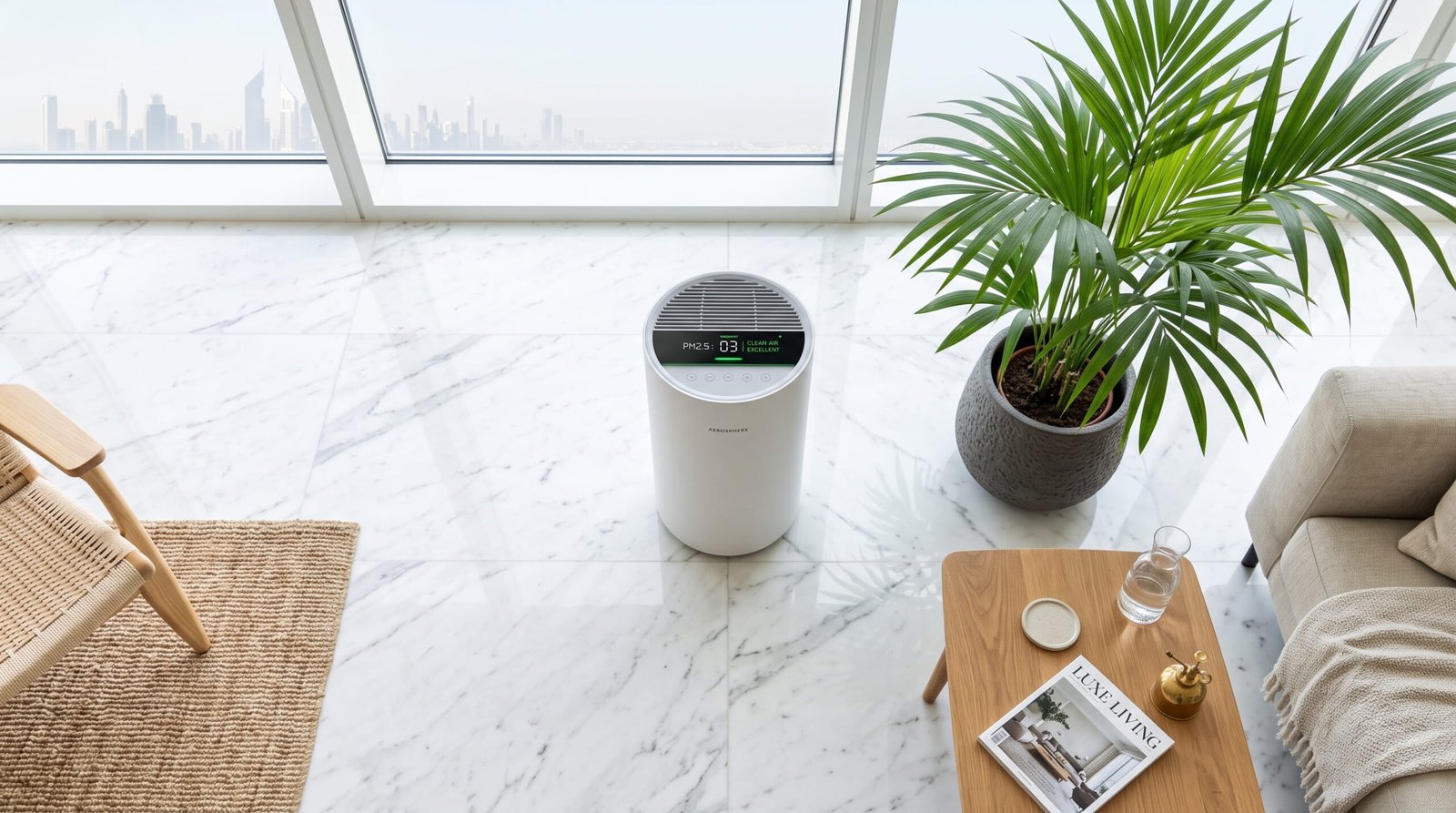
| Studio apartment | 300–400 sq ft unit | One central unit is usually sufficient |
| One-bedroom apartment | Separate units for bedroom + living area | Better than one oversized unit trying to cover both |
| Villa or larger home | Multiple units per floor | Central AC filtration alone rarely covers Dubai’s dust load adequately |
For studio and compact apartment setups specifically, the studio apartment furniture guide covers broader space planning that pairs well with purifier placement decisions.
Where to Place Your Air Purifier
Placement affects performance as much as the unit itself.
- Bedroom units — position near the bed but not directly against a wall, allowing airflow on multiple sides
- Living room units — central placement works best in open-plan layouts; avoid corners, which restrict air circulation
- Avoid placing near AC vents directly — this can cause the purifier to process already-filtered air repeatedly while missing dust settling in other parts of the room
Common Mistakes Dubai Residents Make
Buying based on room size alone, ignoring dust load. A purifier rated for a 300 sq ft room in a milder climate may struggle to keep pace in Dubai’s dust conditions at the same size. Sizing up is usually the safer choice.
Ignoring filter replacement costs upfront. The purchase price is only part of the real cost ongoing filter replacement in Dubai’s high-dust environment adds up faster than in most climates.
Running the purifier only during dust storms. Continuous operation, even at a lower fan speed, is far more effective than switching it on only when dust is visibly bad. By the time dust is visible, it’s already accumulated significantly indoors.
Placing it in a closed room with the door shut. Purifiers need air circulation to work a sealed room with no airflow limits how much air actually passes through the filter.
Air Purifiers vs Standard AC Filtration
A common question: doesn’t the AC system already filter the air? Standard residential AC filtration in most UAE buildings is designed to protect the AC unit itself, not to achieve genuine indoor air quality improvement. It typically captures larger particles but does little for the fine dust that defines Dubai’s specific air quality challenge. A dedicated air purifier with true HEPA filtration addresses a different, finer level of particulate matter that AC filters generally miss.
Where to Shop for Air Purifiers in Dubai
For a range of air purifiers suited to Dubai’s dust and heat conditions, the air purifier section at China Mall covers multiple room sizes and price points across both the Ajman and Dubai locations. Pairing an air purifier with the right home essentials — including cleaning tools for regular dust management gives a more complete approach to indoor air quality than a purifier alone.
For general guidance on indoor air quality and health, the US EPA’s guide to indoor air quality offers accessible, science-based information applicable beyond just the US context.
FAQs
The Bottom Line
Choosing an air purifier for a Dubai home isn’t the same as choosing one for a milder climate. True HEPA filtration, a CADR rating sized up for the local dust load, and realistic filter replacement costs matter more here than in most markets. Get those three factors right, and an air purifier becomes one of the more genuinely useful additions to a UAE home.